About
I'm a backend engineer in Dehradun who got here by teaching first and building second.
I’m based in Dehradun, in the foothills of Uttarakhand. My route into software wasn’t a straight line through a big-name college — it was a diploma at Government Polytechnic Dehradun with a BCA through IGNOU running in parallel, and later an MCA, also through IGNOU, completed while I was already working. Studying at a distance while working teaches you a skill no classroom does: how to learn on your own, under load. I’ve been doing that ever since.
Teaching came before building — at least professionally. I started teaching Python freelance in 2018, then on UrbanPro from 2019, working with everyone from complete beginners to engineers at Microsoft and JPMorganChase. Somewhere in there I went down the machine learning path — an internship at Career Launcher, the Coursera ML Specialization, a Udacity nanodegree — before realizing what I actually cared about was systems: how software is structured, and why it falls apart.
Since 2022 I’ve been building at Inspirebyte — REVISOR, a real-estate acquisitions CRM; Vaastio, a multi-tenant society management platform; and a regulatory compliance system for an EU client. On the side I ship my own tools: Instbyte for local file sharing, TabLedger for expense tracking in the browser.
Today the work splits three ways: I build systems, I help teams untangle theirs, and I teach people how to think through them.
Pragmatic Stewardship
Most of engineering is inheriting systems, not starting them. The job is to leave every system more legible than I found it — boring, documented decisions over clever ones.
The case studiesUntangled Architecture
Most “performance problems” are entanglement problems. When concerns are separated properly, failures stay local and features stop fighting each other.
A rate limiter framed CORSAnticipation Is Not Optimization
Pre-computing, pre-fetching, and caching “just in case” usually adds load, not speed. Delaying work until it’s actually needed tends to make systems simpler and more predictable.
The full argumentTeaching as a Forcing Function
If I can’t explain a decision in plain language, I don’t understand it yet. Teaching since 2018 keeps me honest about that — with students, clients, and my own code.
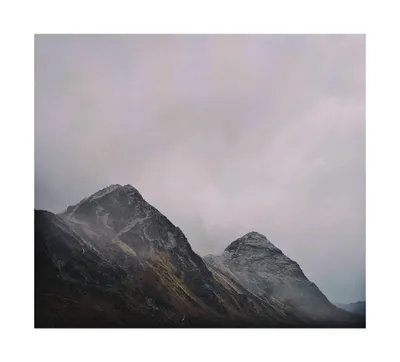
How I teachWhen I’m not building, I’m usually behind a camera — mostly monochrome work: fog, geometry, mountain silence. The rest of the time it’s lofi and late-night builds; parts of this site were made well after midnight, and a few things are hidden around it for anyone curious enough to look.


If any of this maps to a problem you’re thinking through
The case studies show how I work. A conversation is how it starts.