Things I've Shipped
tools, extensions, apps, and automated systems built from idea to production.
Instbyte
Frictionless LAN sharing. No cloud required.
Moving a database dump, an API payload, or a quick snippet to a device three feet away shouldn't require a round-trip to the cloud. Most tools aren't built for "right now, on this local network, gone tomorrow."
A zero-config utility that spins up instantly with `npx instbyte`. Instbyte is a self-hosted local network sharing tool. One person runs the server, everyone on the same network opens the URL in their browser. No install on client devices, no accounts, no internet required.
rawsort
The model sorts your notes. Cryptography proves it never touched them.
Handing a scratchpad of quotes, snippets, links and half-formed ideas to an LLM to organise means trusting it not to quietly reword a line, drop a block, or invent one. For a file you actually care about, "it looked fine" isn't a guarantee.
A CLI and TypeScript SDK that classifies a plain-text file into a fixed taxonomy, then reassembles the output from the original bytes. The model is only ever allowed to return category labels — the text itself is never in its hands to alter, so corruption is structurally impossible rather than merely unlikely. Suspected credentials are detected and masked before anything leaves the machine, then restored locally. Each run emits a portable proof of per-unit SHA-256 digests, so anyone can verify the source survived intact without trusting the tool or the model.
weaveeye-scan
Your cookie banner promises trackers wait for consent. This fails the build when they don't.
A consent banner is supposed to hold trackers back until the visitor says yes. Often it doesn't — analytics, ad networks and data brokers fire in the first few hundred milliseconds, before anyone clicks a thing. That pre-consent tracking is exactly what GDPR/ePrivacy enforcement and the wave of US CIPA wiretapping lawsuits target, and an ordinary deploy can quietly reintroduce it with nobody noticing.
A pre-consent tracking gate for CI. It loads your site in a real browser with Playwright, detects and accepts the consent banner, and timestamps every third party that fired before consent was given. If a consent-requiring tracker jumped the gun, the build fails — with a millisecond-stamped list of exactly which ones and who owns them, each domain attributed from public tracker databases rather than guessed. Runs as `npx weaveeye-scan <url>` or as a GitHub Action that comments the verdict on the pull request; failing categories, exemptions and per-verdict actions are configurable in a `.weaveeye.yml`. It's the enforcement half of the broader WEAVEEYE project — a scanner to see the problem, this gate to stop the next deploy silently regressing it.


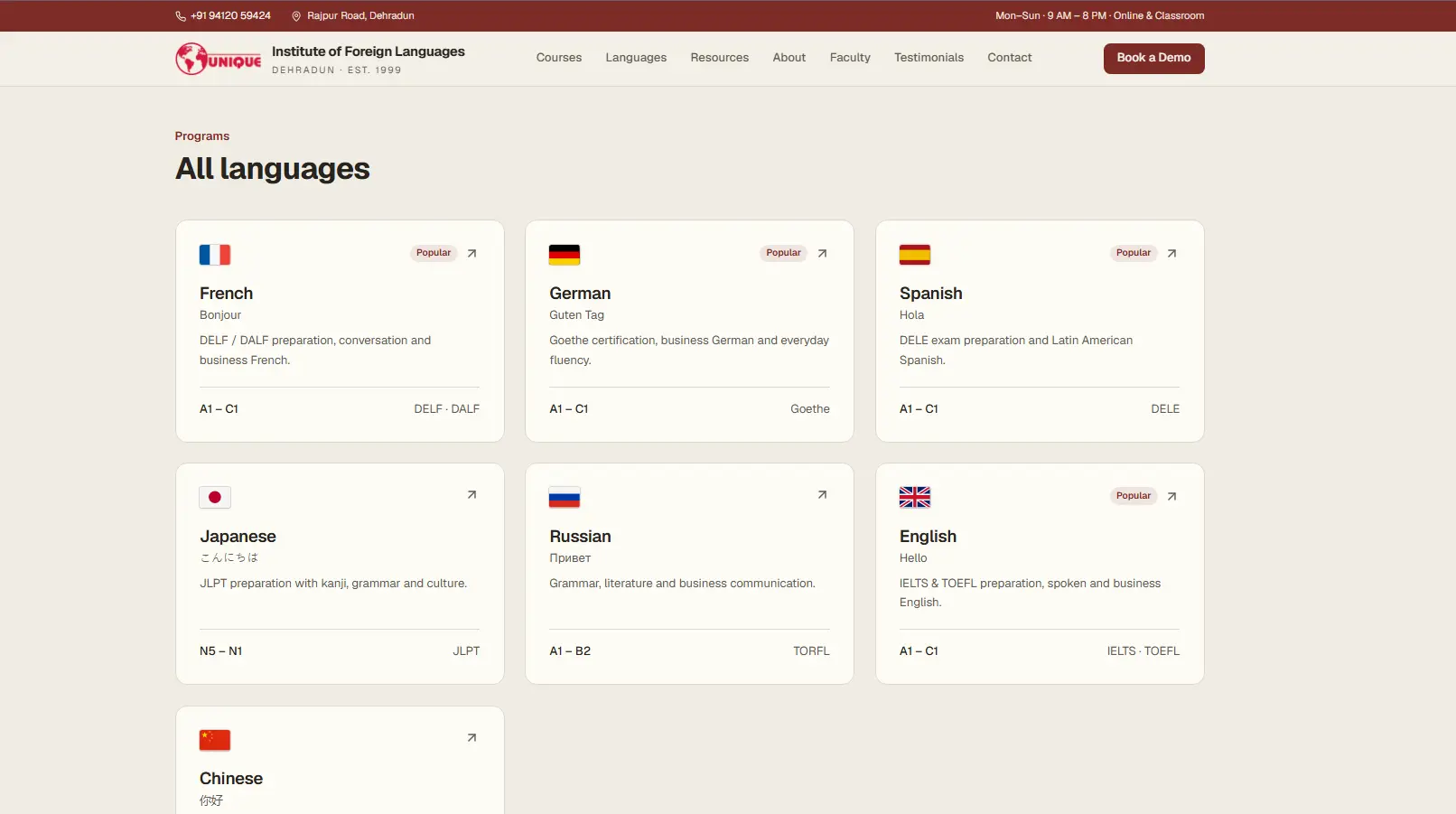
Unique Institute of Foreign Languages
A Dehradun language institute's web home — seven languages, built to be found and to fill batches.
An institute teaching foreign languages in Dehradun since 1999 ran mostly on walk-ins and word of mouth. It needed a presence that shows up when someone nearby searches "German classes" or "IELTS coaching near me" — and turns that visit into a call or a WhatsApp enquiry, not just a brochure sitting online.
A fast Next.js marketing site with a dedicated, search-tuned landing page for each of the seven languages — French, German, Spanish, Japanese, Russian, English and Chinese — mapped to the exam people actually search for (DELF, Goethe, JLPT, IELTS and more). Local-business JSON-LD, a generated sitemap and robots, and per-language Open Graph images make it legible to Google; a single source-of-truth config keeps the name, address and phone identical everywhere they appear; and an llms.txt even briefs AI answer engines so they describe the institute correctly. Every page routes to a call button and WhatsApp, so being found turns into an enquiry.

Inspirebyte.io
Our agency's website, built end-to-end from the ground up.
The firm needed a proper web presence and a backend that could actually support client work, services, and quick internal services.
Designed and shipped the frontend and backend for Inspirebyte, the software agency I work at. UI/UX, API design, and the backend sync with internal services.
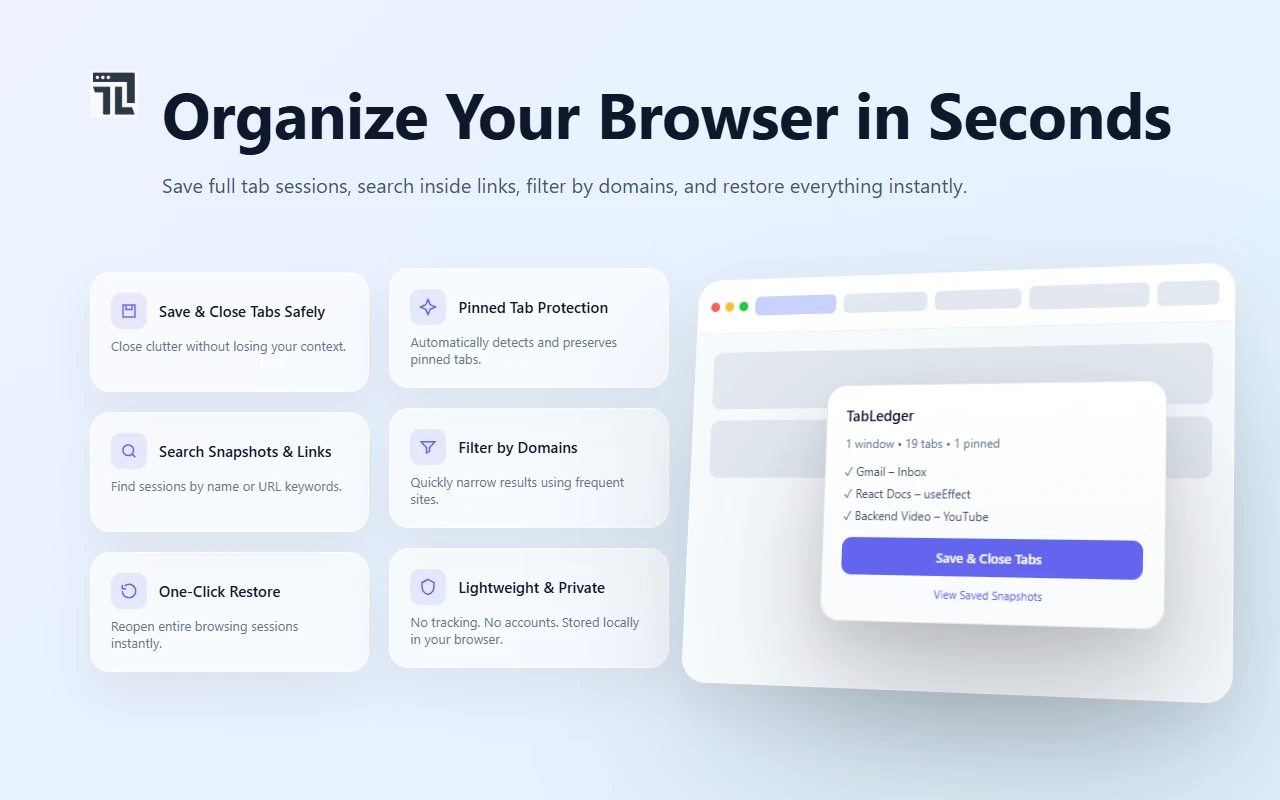
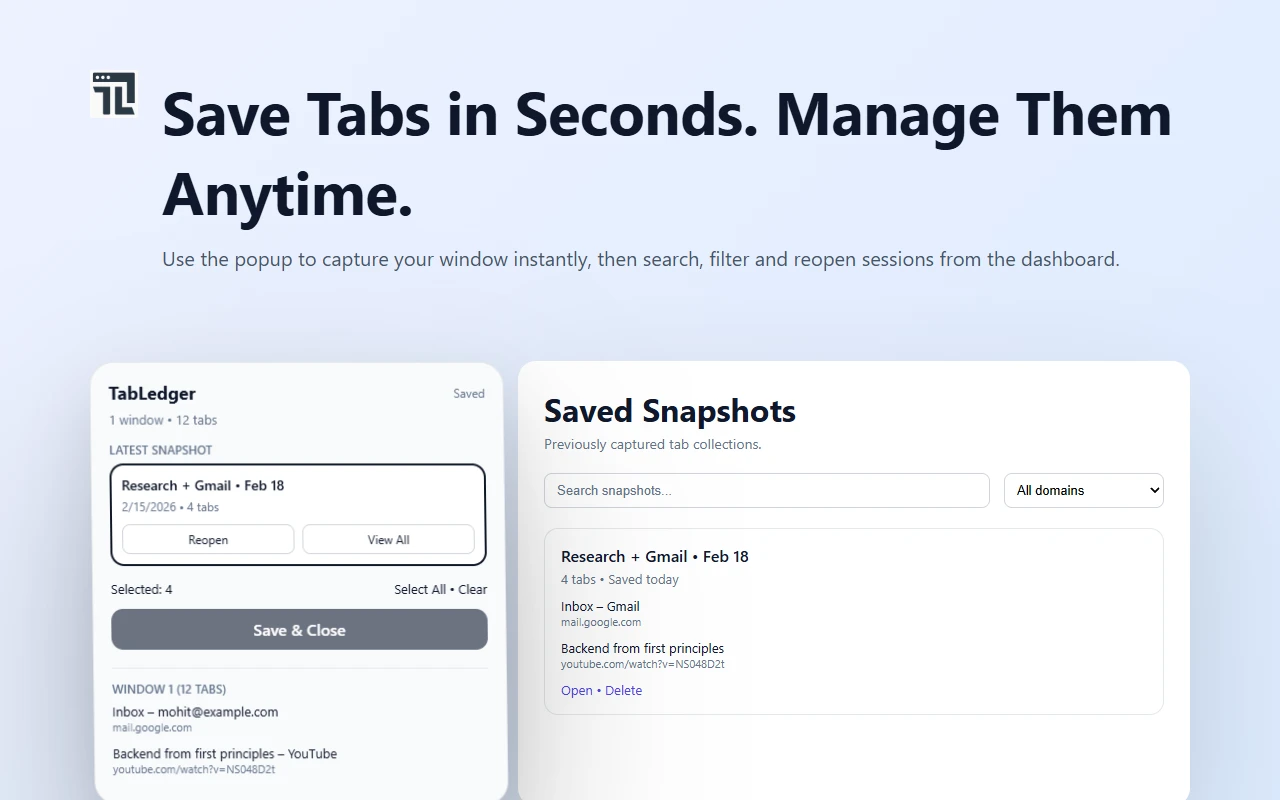
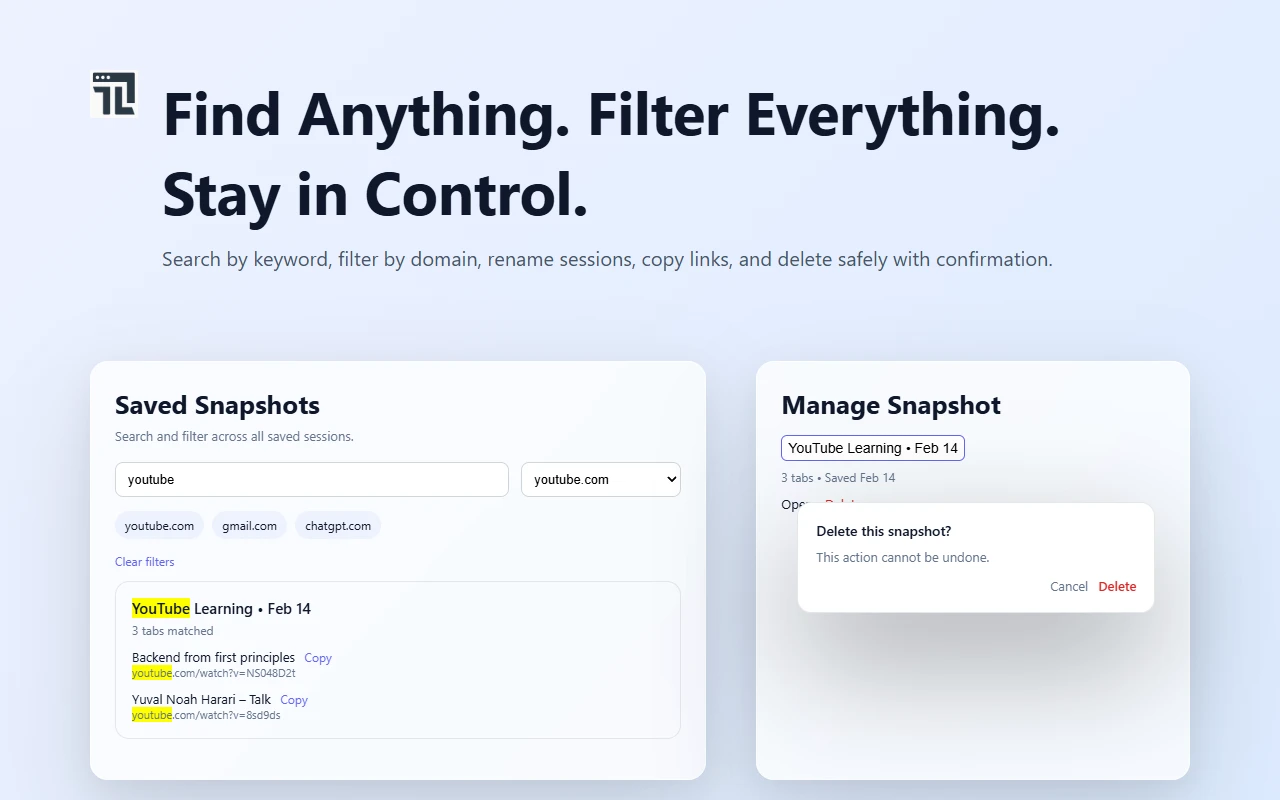
TabLedger
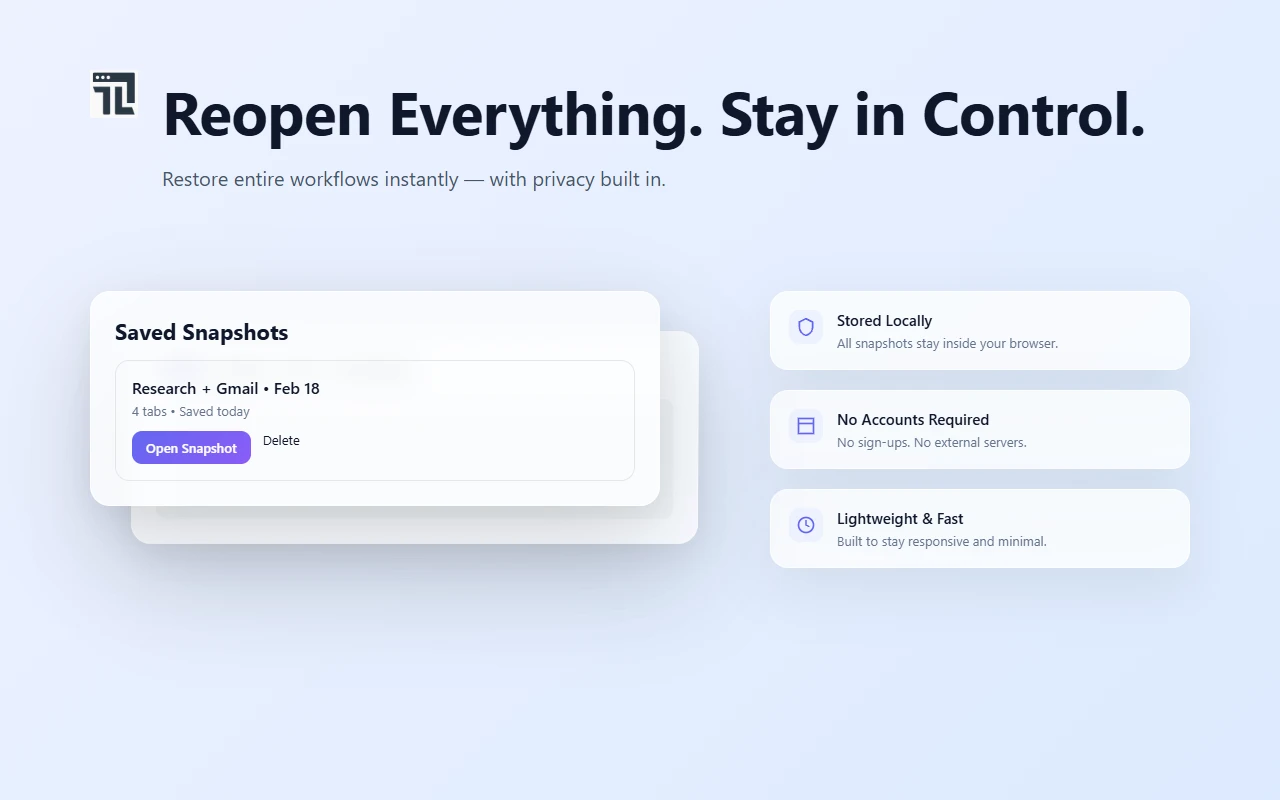
Save and restore browser tab sessions without losing context.
Managing large numbers of tabs across research and development workflows often leads to clutter, lost context, and fragile workarounds like temporary windows or saved links. Existing approaches helped organize tabs but didn't provide a reliable way to capture and restore a working state.
A Chrome extension that captures browser tab sessions as structured snapshots and restores them later. Designed as a local-first utility using IndexedDB for predictable performance and reliability. The focus is on simple workflows, safe session handling, and fast retrieval of previously saved contexts — all without external services or accounts.
Revisor
A specialized CRM architecture for real estate investors.
Real estate acquisition pipelines are complex and data-heavy, yet most operators force them into generic, off-the-shelf CRMs. Revisor maps to how REI acquisition actually works — lead routing, dispositions, valuations — instead of forcing those workflows into a generic CRM.
Revisor, developed at Inspirebyte, is an operations system built to manage high-volume real estate acquisitions. Engineered with Next.js, React Server Components, and an optimized database, it supports automated lead routing, omnichannel communication, and real-time valuation (ARV/ROI). The goal was simple: replace fragmented tools with a unified system that drives deal flow.

Vaastio
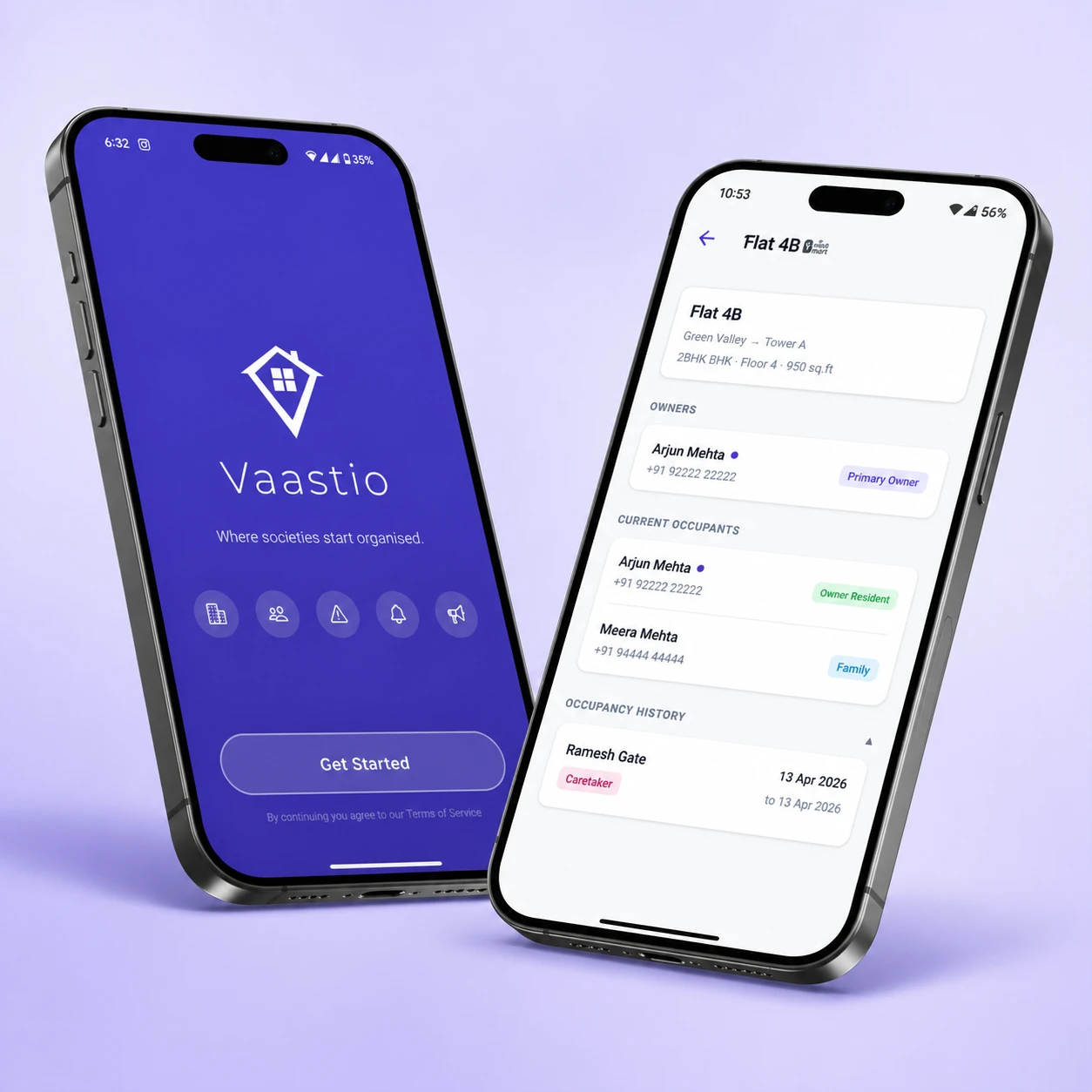
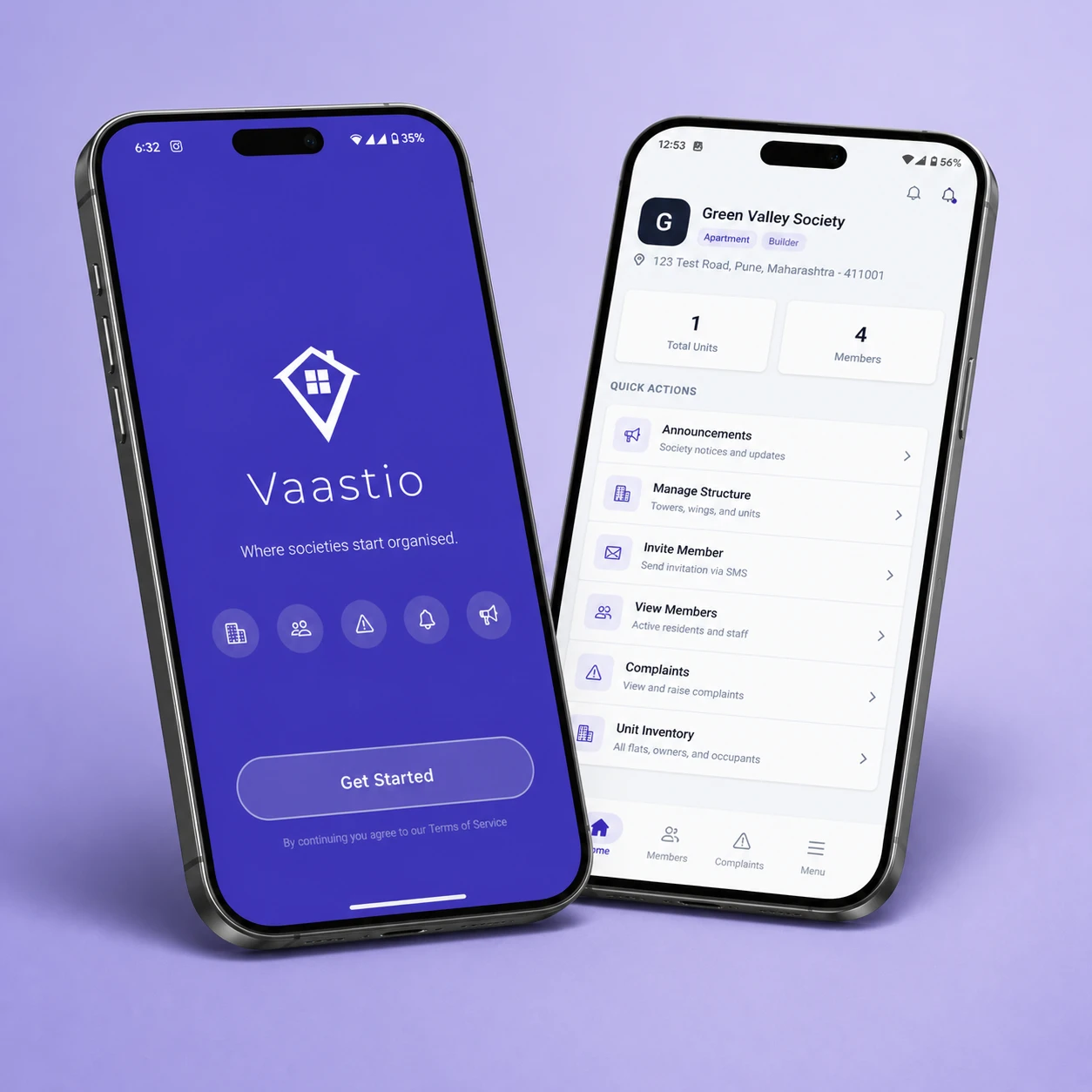
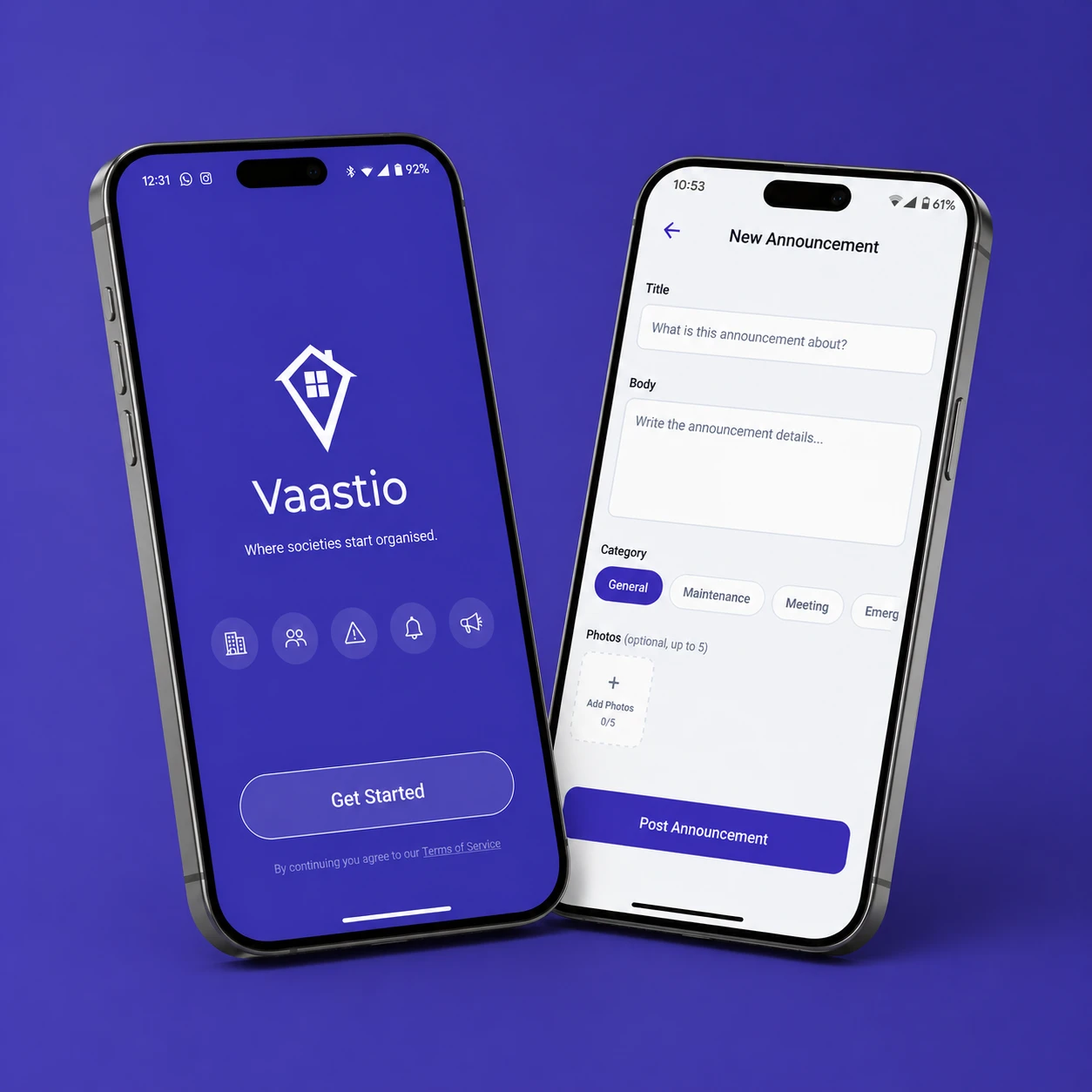
Where societies start organized, and simplified.
Legacy society management tools force rigid schemas (like fixed towers/wings) and clumsily collapse physical occupancy with digital app accounts, making them instantly brittle. Builders and admins needed a system that actually maps to physical reality, not the other way around.
A complete operational ecosystem built to handle complex residential environments. Architected using a strict four-layer separation pattern (Identity, Property, Access, Operations) alongside a self-referential PostgreSQL node tree to support arbitrary unit layouts — towers, wings, villas, mixed — without schema changes. Deliberately decouples Ownership, Occupancy, and App Membership, so occupancy history stays intact when residents move or units change hands. Designed as a unified Turborepo monorepo feeding React Native apps for gatekeepers and residents — a new society, with its units, residents, and gate staff, can be fully onboarded in under 30 minutes.
Property Listings Automation
Concurrent data pipeline for hard-to-automate listing sources.
A client needed to track property inventory across heavily protected real estate platforms. They were missing out on deals because manual discovery couldn't scale to their operational needs.
A scheduled desktop application that reliably collects and aggregates off-market real estate data from sources that are difficult to automate. It orchestrates concurrent headless browsers with session management, retries, and rate-aware scheduling to keep collection stable over long runs, utilizes lxml and regex to extract structured metadata, and serializes it into a local database. Features a dedicated UI to manage background crawler jobs and export filtered inventory to CSV generation workflows using Pandas.
Client work — no public link
Confidential — EU Regulatory Platform
DSA/ODS compliance system for a regulated EU entity.
The client needed a fault-tolerant case management system to comply with the EU Digital Services Act (DSA), requiring strict access controls, real-time dashboard updates, and immutable audit trails.
Engineered a multi-role operational backend bridging Complainants, Operators, and Admins. Designed an RBAC model that keeps complainant, operator, and admin data strictly partitioned — no role can see across the boundary, by construction. Implemented Redis-backed asynchronous queues (BullMQ) for heavy background tasks, WebSocket (Socket.io) integration for real-time triage updates, and automated PDF dossier generation to satisfy regulatory compliance standards.
No public link
Have something you want built?
If you're thinking through a product, a system, or just an early idea,